
How to read better
Wide and deep reading


Dear Michael
I thought maybe you could help me ... College has begun to make it clear to me that I read to get the answer I'm looking for, instead of reading for knowledge and understanding. I often skim-read to find what I'm looking for, but I don't take in the larger argument of what I'm reading, and I can never retain what I've read afterwards. I do the set readings, but when it's time to engage with them in class, I struggle to remember what I've read or what the argument was. I think it's a case of reading because I have to, instead of engaging with what I'm reading.
I guess the question is then - how do you read well? I am increasingly seeing the importance of being well-read in a ministry setting, especially if I want to preach and teach well, and if I want to be a pastoral and effective minister. I would love your tips and tricks on how I can improve my reading, so I can continue to set myself up for a lifetime of ministry.
Yours,
Ben

Dear Ben,
I am so glad that you've asked this question in the first place, because that shows that at least you can see the value in wide and deep reading. You've also observed that there are (at least) two types of reading - a functional type of reading, whereby you quickly dig to find that answer that you are after, and a second type.
With this second type, you've noted that reading this way would take in the larger argument and also lead to better memory retention.
That's a noble aim. Reading both widely and deeply equips you as a pastor and as a teacher. You become not just more knowledgeable, but you become more human - more empathetic, more aware of the history of ideas, more aware of your own context.
So, how to read well?
1) Few books, and good. A wise scholar said this to me once. He was deploring the current trend for scholars to say that they had read absolutely everything. Rather, his point was: read the classics, and re-read them. Better to read Augustine (say) - and to re-read him - than to read another journal article.
This, of course, implies that there is a canon of great theologians and other writers.
Yes. Yes, there is. Don't waste time on fads.
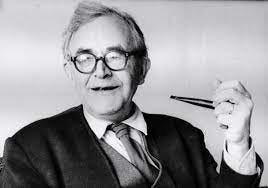
2) Put a face on it/ tell a story. It is so much easier to remember anecdotes and characters. My best theology teachers told the stories of the great thinkers and writers - and I've never forgotten the Barth/Brunner controversy (for example). Find a photograph of the writer, maybe, which gives you something to visualise as you read them.

3) Read with a pen. Not a highlighter, a pen. Or if you are reading on Kindle/on screen, write high-level summary points as you go. I always write in my books. Writing or noting summaries is very effective, but it is a bit of a lost art these days. We are too good at typing - when we type notes, we tend to type too much. For this reason, I would always say use a pen and paper to take notes in lectures.
4) Verbalise what you've read. For really important things to read, a reading group is great. A chance to put what you've read in your own words is a great way to ingest ideas. The one who teaches learns twice - it is great to have to explain what you’ve read to someone else. Or at least: imagine yourself doing it.
5) Commit to reading. The more you read, the more you will read and the better a reader you'll be. You’ll know what it is fluff and what matters. You’ll find key sentences. You’ll be able to make connections between ideas and arguments - and personalities.
6) Also: with theology, which can be quite abstract, look for the cues as to what the main points are. Read the conclusion first! It isn't cheating. If you know where someone is heading, you'll be able to follow their argument.
7) Pithy quotes: it does help to be able to remember a pithy quote from a thinker that summarises his/her thought...
Hope that helps!
Michael
I hope that there’s a sequel: “How to write better”?
It came at the right time...also maybe this will help you ; get rid of the complex that you have to finish the book as soon as possible...take your time